
Sectors
Healthcare facilities
Hazardous healthcare waste has a unified GCC system that starts where the waste is produced in each department and ends at a licensed treatment facility.
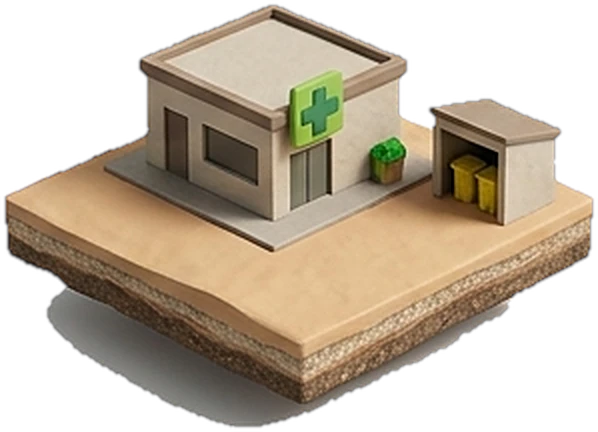
What you usually need
The core requirements from the official regulations.
Segregation at the point of production
Hazardous waste is separated where it is produced, in colour-coded bags and containers: yellow for infectious waste, red for human tissue and body parts.
Source: GCC Unified System for Healthcare Waste Management and its regulationPacking and labelling
Bags are sealed inside the department that produced them and carry labels with the required information and the biohazard symbol.
Source: GCC Unified System for Healthcare Waste Management and its regulationLimited temporary storage
Temporary storage is in a designated collection point inside the facility and does not exceed 24 hours.
Source: GCC Unified System for Healthcare Waste Management and its regulationA waste officer in the facility
A healthcare waste officer supervises collection and internal transport.
Source: GCC Unified System for Healthcare Waste Management and its regulationTransport and treatment by licensed providers
Waste is handed to a transporter and treatment facility licensed by MWAN, which licenses treatment facilities.
Source: GCC Unified System for Healthcare Waste Management and its regulation; Implementing Regulations of the Waste Management Law
Other sectors
Factories
Operating permits, monitoring and measurement programmes, and periodic emission reports.

Contractors and construction projects
Construction permits, a site environmental management plan, and dust and waste control.
Fuel stations
Operating permits, environmental inspection, and management of petroleum waste.

Quarries and mining
Impact assessments, rehabilitation and closure plans, and environmental monitoring.

Waste and recycling
Licensing your activity through the MWAN platform, and preparing facilities and records.